Historical Puzzles
The fifth instalment in our series of posts by BAIS postgraduate bursary winners comes from Rachel Kowalski (Wolfson College, Oxford). Rachel utilised her bursary funding for a trip to Galway to speak at an NUI Galway research seminar about her work on the Provisional IRA and sectarianism.
As a historian, I spend my research hours seeking out material that reveals the character and dynamics of past events. I work to understand how moments or actions were experienced, witnessed or perceived at the time, and how they have been remembered, contested, forgotten or erased since. I often feel as though my PhD involves working to complete a jigsaw puzzle that is missing not only some of the pieces, but even the guidance that would normally be provided by the picture on the box. A combination of reckless optimism and caffeine gives me the resilience required to persevere with this thesis-puzzle; I assure myself that as long as I can find the four corners, some of the edges, and a selection of middle-pieces capturing sufficient variety, I could at least be close to presenting a nuanced picture of what took place.
In order to capture the full range of voices of the past that represent my topic of research, it was always going to be essential for me to travel. My thesis revisits the activities of the Provisional Irish Republican Army (PIRA), a paramilitary organisation active between 1969 and 1998, primarily in Northern Ireland and England. Essentially, it explores the internal and external forces which shaped the design, outcome and impact of PIRA violence. The work involves examining the micro-dynamics of the events in which the PIRA perpetrated violence through a broad base of source material, with a combination of qualitative and quantitative research methods. My Oxford University base is convenient for accessing much of the material I need: the Bodleian Library and London-based archives have provided me with copious research materials, from newspapers, film and physical artefacts to oral history, security stairsteps and reports. But I was never going to be able to find enough pieces of the puzzle unless I visited the archives that lie across the Irish Sea.
This past year my PhD work has taken me to both Belfast and Galway for archival research, seminar presentations and a writing masterclass – trips that would not have been possible without the generous support of the British Association of Irish Studies (BAIS) and its postgraduate bursary. Belfast-based archives such as the Public Records Office of Northern Ireland (PRONI) and the Linen Hall Library are home to rich sources that hold key pieces of information or record a diverse range of perspectives that can be absent from sources accessible in London. PRONI is home to sources relating to court cases or post-mortem inquires, for example, which can include detail that is critically important to our understanding of precisely ‘what happened’ in any given event. The Political Collection at the Linen Hall Library provides the opportunity to restore the complexity and diversity of human experience to the topic: the vast collection of local newspapers, journals, posters, memoirs and more captures a wide range of voices and can reveal a host of experiences and opinions of those who were involved in or lived through the conflict. This detail is generally expunged from the clinical reporting of events in legal, military or political sources.
The majority of the time I spent in Belfast and Galway this year was spent raiding archives. But the other equally important purpose of my trips was to take up the opportunity to test the integrity of my work-in-progress. This included giving a paper for the NUI Galway research seminar, featuring in a panel of papers at the Queen’s University Belfast public event titled ‘1969: The Outbreak of the Troubles in Northern Ireland’, and attending a Notre Dame writing masterclass accelerator workshop at the Kylemore Global Centre. These experiences were truly some of the most beneficial elements of my trips. I am grateful to all those who asked questions or offered critique of my work at these events. Of particular note, was the Q&A that followed my Galway paper, which lasted well over an hour and certainly gave me some fresh ideas.
On the face of it, my BAIS postgraduate bursary facilitated travel and accommodation costs of research trips where I gathered materials or presented my work. But, in reality, the grant brought me so much more than plane tickets or Airbnb stays: it gave me the chance to hunt for essential pieces that would otherwise be missing from my thesis-puzzle, and the opportunity to have those reassembly skills appraised by experts in my field, for which I am both humbled and grateful.
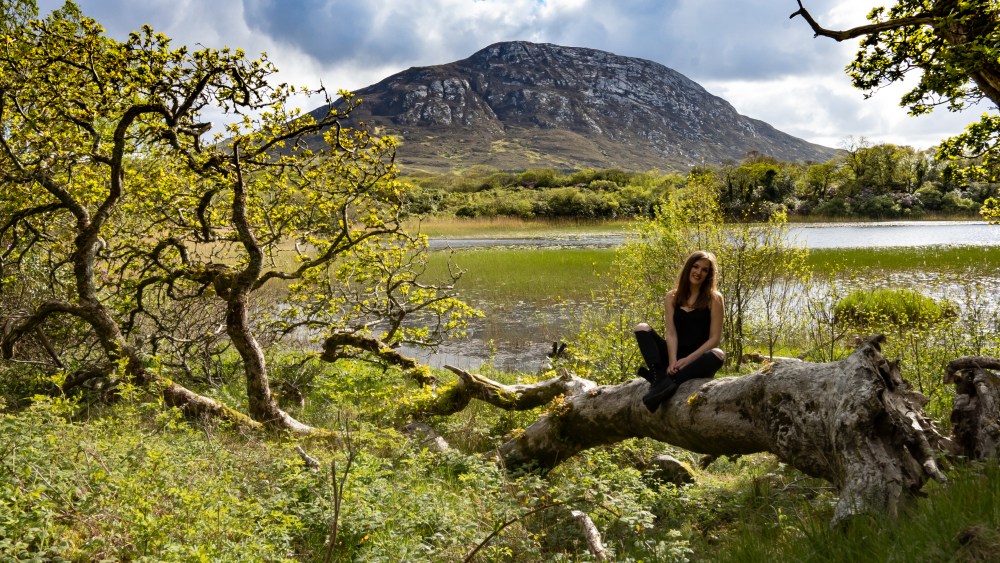
Rachel is a Wolfson Scholar and PhD candidate at the History Department of the University of Oxford under the supervision of Prof. Ian McBride and Dr. Marc Mulholland. In 2016 she founded the Oxford Seminar for the Study of Violence, which has grown from the original series into the research network Violence Studies, with associated podcast Understanding Violence podcast which Rachel writes, edits and produces.
*Photos courtesy of the author.
 British Association for Irish Studies